
Learning Together: Vygotsky and the Montessori Approach
By Lindsay Harrison, IMH-E
Have you ever watched a child struggle with something just out of their reach? Maybe they are trying to zip their coat, build a tower that keeps falling, or figure out how to join a game with a friend. An adult’s first instinct may be to step in and solve the problem for them. The most meaningful learning happens when we offer just enough support and give children the opportunity to try for themselves. This idea is integral to the work of psychologist Lev Vygotsky and his concept of the Zone of Proximal Development. In Montessori, this concept helps us understand how children develop skills and independence through meaningful challenges and support from the adults around them.
Lev Vygotsky was a Belarusian developmental psychologist best known for his Sociocultural Theory of development. He believed that children develop knowledge and skills through interactions with other people and their environment. His concept of the Zone of Proximal Development (ZPD) describes the space between what a child can do independently and what they can accomplish with support from someone with more experience.
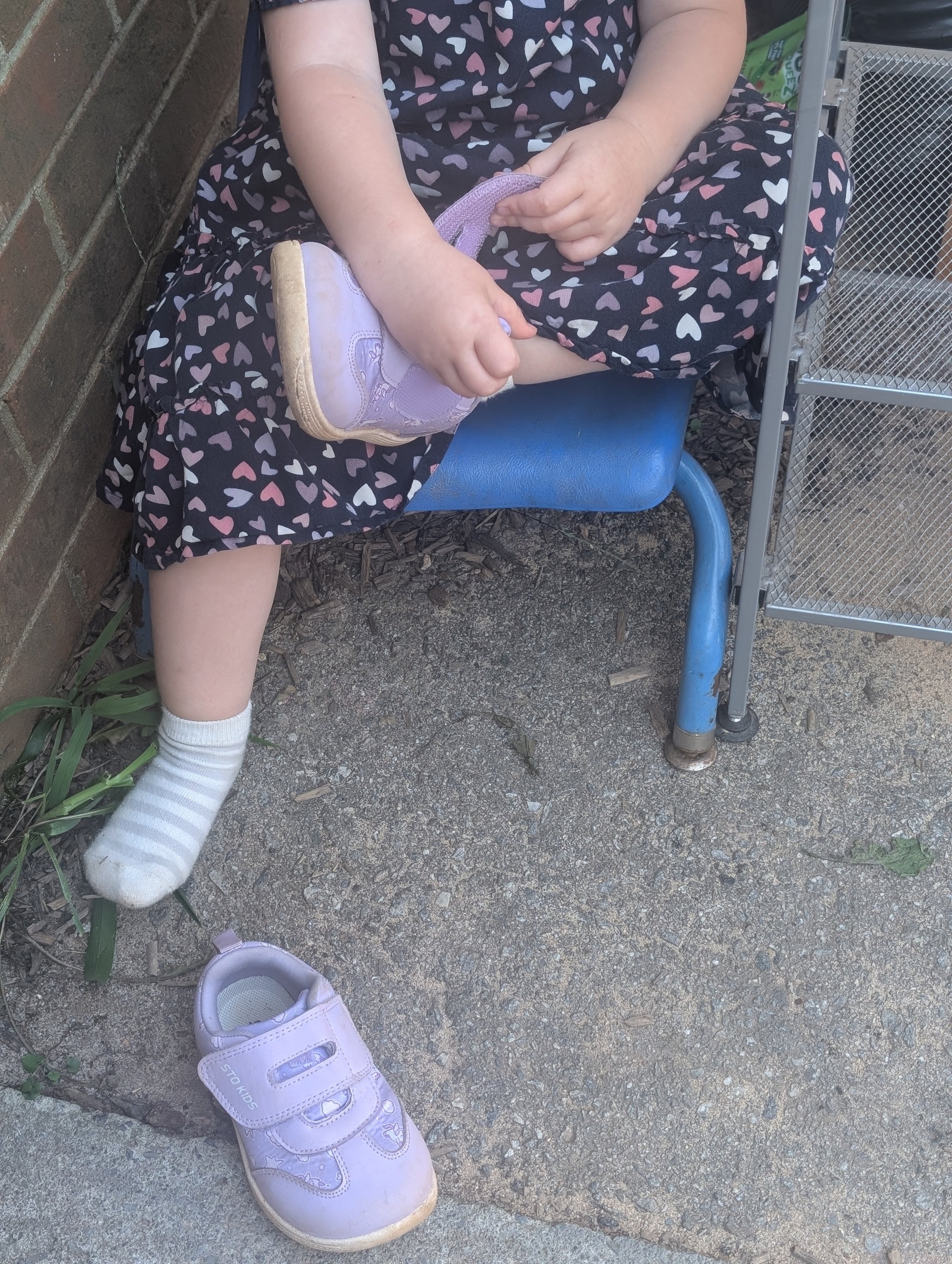
Think about a child learning to put on their own shoes. They may not yet be able to complete every step independently, but an adult can offer a demonstration, a verbal reminder, or help position the shoe while allowing the child to finish the task. In the toddler program at MLC, some teachers use the rhyme, “Open wide, toes inside, wiggle and slide,” to help children remember the steps. With practice, the support becomes less necessary. The goal is to provide just enough support for the child to accomplish something they could not yet do alone.
Both Montessori and Vygotsky viewed children as active participants in their own development. Children learn through exploring, interacting, and making meaning. Montessorians see children as capable, with a natural drive toward independence and learning. The Montessori guide observes the child, prepares the environment, introduces materials, and provides guidance when needed.
Montessori’s mixed-age classrooms provide natural opportunities for learning within the ZPD. Children observe peers with different levels of experience and ability and often learn by watching and imitating one another. A younger child might watch an older classmate pour water or complete a classroom routine and then attempt the skill themselves. The older child, in turn, has an opportunity to reinforce their own knowledge by demonstrating it. Children become both learners and teachers. This supports independence and a sense of belonging within the classroom community.
Vygotsky’s ideas also provide a helpful way to think about the Montessori teacher’s role. A teacher is not there to provide every answer or prevent children from experiencing difficulty. Instead, the teacher observes and considers what kind of support will help the child move forward.
For example, imagine a child learning to pour water from a small pitcher into a glass. The teacher might first demonstrate how to hold and slowly tip the pitcher. As the child’s coordination develops, the teacher gradually steps back and allows them to complete the activity unassisted. The teacher provides enough support to make the challenge accessible.
This temporary support is known as scaffolding. In a Montessori classroom, scaffolding might include modeling how to use a material, breaking a task into smaller steps, or offering a reminder. As the child becomes more capable, the teacher removes the support. This is closely connected to the Montessori principle often expressed as, “Help me to do it myself.”
The ZPD can also support children’s social and emotional development. Learning to resolve a disagreement, wait for a turn, or ask a friend for help may require adult support. A teacher might give children language to express what they need and, over time, that support becomes less necessary as children begin using the language themselves. Relationships are not separate from learning. Relationships are one of the ways learning happens.
Vygotsky’s work reminds us that children grow through relationships, exploration, and participation in their communities. Montessori education provides an environment where these ideas come to life through prepared spaces, mixed-age communities, and teachers who observe children closely and respond to their individual needs. Both perspectives invite us to look at what they are becoming capable of doing.
When we pause before stepping in and offer a small amount of help instead of taking over, we give children the opportunity to discover their own capabilities. They may need to try several more times. And that’s okay. Sometimes the most important thing for a child to learn is this: I can do so many things all by myself.
